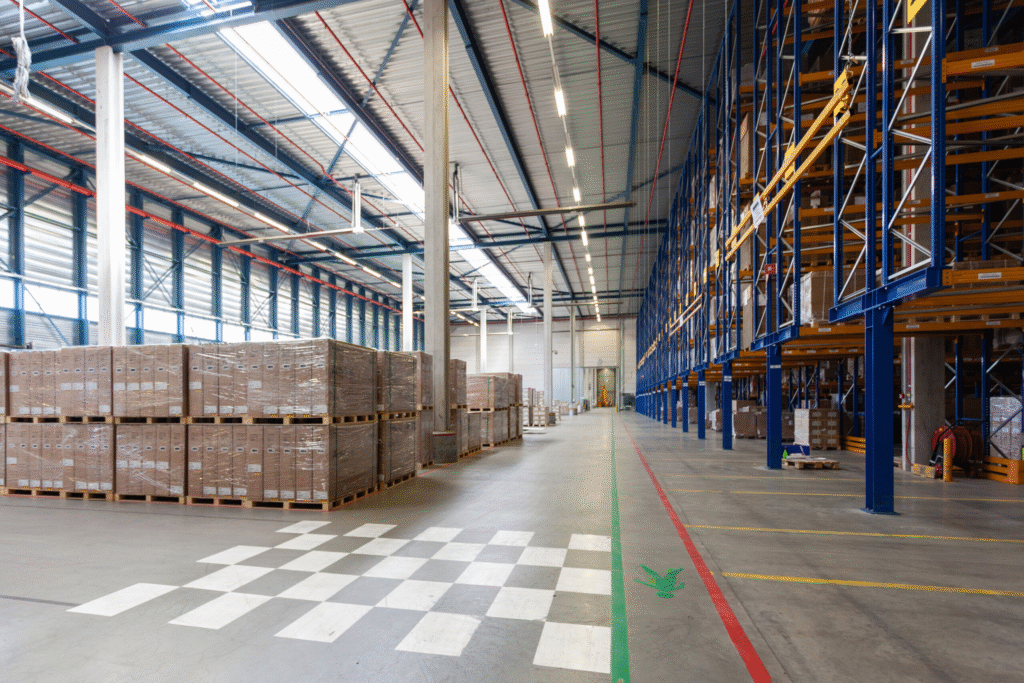
In today’s highly competitive marketplace, businesses across industries are constantly searching for ways to improve efficiency, reduce in business costs, and enhance customer care. One of the most impactful strategies emerging in recent years is the adopting of One-stop warehousing, an extensive logistics model that integrates multiple services under a single in business center. This method consolidates storage, inventory management, order processing, packaging, distribution, and value-added services into one seamless ecosystem. As global trade continues to change, the concept of one-stop warehousing has quickly be a preferred solution for companies seeking to reduces costs of their supply chains and improve overall performance.
At its heart, One-stop warehousing gives a centralized solution that eliminates the requirement for multiple carrier’s networks 上門迷你倉. Traditional supply chains often involve various partners responsible for different levels of the process, such as storage, transportation, and dispatch. While this multi-provider model can work, it frequently leads to communication challenges, delays, and increased costs. By comparison, a one-stop warehousing service brings all essential logistics functions together under a single roof. This simplifies coordination, enhances visibility, and reduces the possibilities of errors or inefficiencies, making it an ideal choice for businesses with growing in business needs.
One of the most compelling advantages of implementing One-stop warehousing is improved efficiency. When all logistics processes are handled within the same facility, operations flow more efficiently and consistently. Goods can move quickly from storage to providing and dispatch without being forced to be transported between separate locations. This speeds up order fulfillment times and allows businesses to respond rapidly to changing market demands. For companies operating in industries such as e-commerce, retail, manufacturing, and consumer goods, where speed is essential, one-stop warehousing offers a powerful competitive edge.
Cost reduction is another major benefit associated with the one-stop warehousing model. Managing multiple carrier’s networks often leads to cloned expenses, transportation costs between facilities, and increased admin workloads. With One-stop warehousing, these extra expenses are eliminated. Businesses work with one integrated provider, reducing cost to do business and simplifying financial management. Economies of scale also come into play, as consolidated operations often result in lower per-unit handling costs and more efficient use of space, labor, and technology. Over time, these savings can significantly impact earning and sustainability.
The growing increased exposure of real-time data and digital visibility in supply archipelago operations further enhances the selling point of One-stop warehousing. Modern logistics relies heavily on accurate information, from inventory levels to order status and delivery timelines. Integrated warehousing solutions typically use advanced software systems offering complete visibility across all in business levels. This permits businesses to monitor stock movements, identify trends, predict demand, and make informed decisions. Enhanced visibility reduces the risk of stockouts, overstocking, and other inventory-related conditions that can break up operations and affect customer care.
Another important factor of One-stop warehousing is the flexibility it gives. Businesses today must anticipate to adapt quickly to market changes, in season demand changes, and supply archipelago interferences. With integrated warehousing services, companies can scale operations up or down based on real-time needs without the intricacy of coordinating external partners. This flexibility becomes particularly valuable for fast-growing businesses or those navigating capricious markets. Whether growing to new regions or managing sudden increases in orders, one-stop warehousing provides reliable flexibility.
Customer care also improves when companies adopt a One-stop warehousing approach. Faster processing times, reduced errors, and consistent service quality all contribute to a better experience for end customers. In sectors such as e-commerce, where timely deliveries and accurate orders are very important for customer loyalty, efficient warehousing becomes a critical aspect in business success. Companies that rely on one-stop warehousing often achieve higher delivery accuracy, stronger service reliability, and improved customer maintenance rates.
Value-added services form another crucial part of the one-stop warehousing model. These services occasionally includes labels, kitting, product customization, repackaging, quality evaluation, returns management, and more. By offering these capabilities in the same facility as storage and distribution operations, One-stop warehousing enables businesses to enhance product presentation, reduces costs of returns, and manage specialized requirements without freelancing. This integration helps improve branding, reduce transformation time, and create a seamless workflow that supports a wide variety of business needs.
Technology continues to play a significant role in the development of One-stop warehousing. The rise of automation, robotics, artificial brains, and data analytics has transformed how modern warehouses operate. Automated picking systems, smart storage solutions, real-time tracking, and predictive analytics all contribute to faster and more accurate operations. Integrated warehouses often adopt these technologies prior to when traditional facilities, giving businesses access to cutting-edge tools that improve productivity and reduce human error. As digital innovations continue to develop, the capabilities of one-stop warehousing will only expand further.
Safety and risk reduction are additional reasons why many companies prefer a one-stop warehousing solution. A fragmented supply archipelago leaves more room for mistakes, miscommunication, and logistical issues. By centralizing processes, companies can implement consistent safety standards, streamlined quality control procedures, and efficient risk management strategies. With everything under one management system, it becomes safer to maintain complying, reduce damage to goods, and minimize the possibilities of in business interferences.
Sustainability is becoming an expanding priority for companies worldwide, and One-stop warehousing contributes significantly to green responsible logistics practices. By consolidating operations into a single location, businesses reduce the need for multiple transportation avenues and facilities. This reduces h2o and emissions, decreases energy consumption, and lowers waste. Many one-stop warehousing providers also implement environmentally friendly practices, such as energy-efficient equipment, optimized packaging methods, and these recycling initiatives. As more companies move toward eco-conscious strategies, integrated warehousing offers a practical way to achieving sustainability goals.
The future of supply archipelago management strongly suggests that One-stop warehousing will continue to grow in importance. As global markets are more interconnected and consumer expectations rise, businesses will rely on streamlined, efficient, and adaptable logistics solutions. Companies seeking long-term success must prioritize in business efficiency, technological integration, and customer-centric approaches. One-stop warehousing aligns perfectly with one of these priorities, offering a strong foundation for modern logistics strategies.