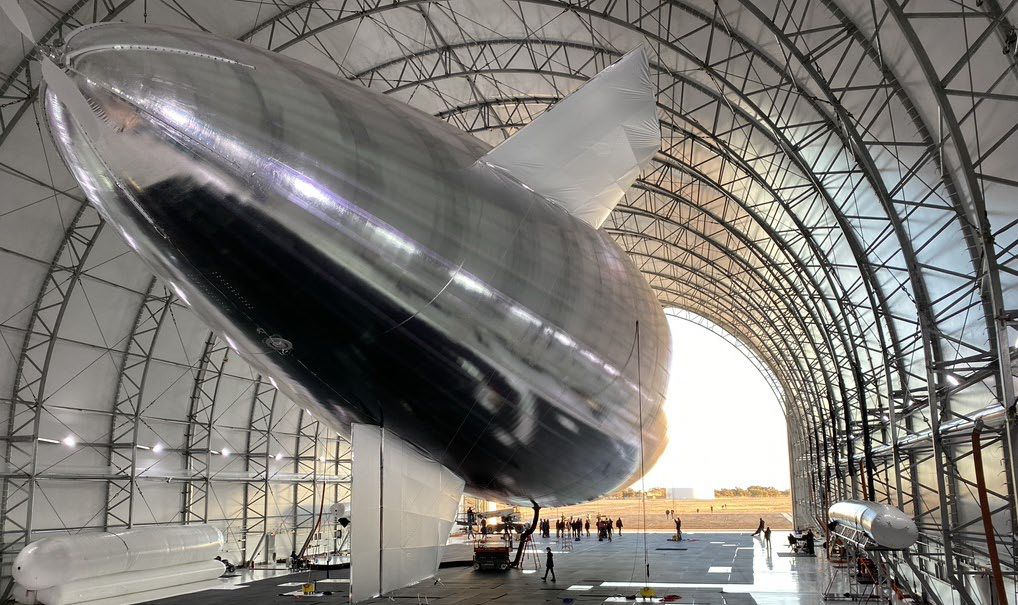
Sceye HAPS Specs That Include Payload, Endurance And Battery Breakthroughs
1. Specifications Tell You What an actual platform can do
There’s a tendency within the HAPS sector to focus on goals instead of engineering. Press releases provide coverage areas, partnership agreements, and commercial timelines. But the more challenging and more revealing conversation is about specifications — what the vehicle actually carries, how long it actually remains on the road, as well as what energy systems make continuous operation possible. Anyone who wants to know whether a stratospheric platform is genuinely mission-capable and not developing in the hopeful prototype stage, the payload capacity, endurance numbers and battery efficiency are the places where the essence lives. False promises of “long endurance” and “significant payload” are easy. Delivering both simultaneously, at an altitude of above is the engineering issue that separates legitimate announcements from bold announcements.
2. Lighter than Air Architecture Modifies the Payload Equation
The primary reason that Sceye’s airship design has the capacity to carry significant payload is buoyancy carries out the main task to keep the vehicle afloat. This isn’t an unimportant difference. Fixed-wing solar aircraft must generate aerodynamic lift constantly this consumes energy, and can impose structural constraints that limit how much extra weight the vehicle can be able to carry. Airships floating at equilibrium in the stratosphere won’t expend energy fighting gravity in the same manner, that means that the energy generated by its solar array, as well as the structural capacity of the vehicle can be directed toward stations keeping, propulsion and the operation of the payload. It’s the result of an airship with a payload capacity fixed-wing HAPS designs with comparable endurance are genuinely struggling to match.
3. Payload Capacity Determines Mission Versatility
The real-world significance of greater capacity for payloads becomes apparent when you think about what the stratospheric projects actually call for. A telecommunications payload — antenna systems such as signal processing hardware, beamforming equipment — has the real weight and volume. So does a greenhouse gas monitoring suite. The same goes for a wildfire detection or Earth observation package. To run one of these mission successfully requires equipment that is large. A multi-mission system requires more. The specifications for Sceye’s Airship are based around the notion that a platform in the stratospheric region should be able to carry a genuinely valuable combination of payloads rather than requiring users to choose between observation and connectivity, since the vehicle won’t be able to handle both at once.
4. Endurance is Where Stratospheric missions are either won or lost
A platform that can reach high altitude for at least about 48 hours prior to having to fall is an excellent option for demonstrations. Platforms that remain in place for weeks or months at and is suitable for developing commercial services. The difference between the two outcomes is basically an energy issue — specifically, whether or not the vehicle is able to generate enough solar energy during daylight hours to run all its systems and charge the batteries enough to sustain fully functioning through the night. Sceye endurance targets are designed around this challenge during the day and treat the requirement for energy supply during the night not as an end-of-the-line goal however as a primary of the design criteria that everything else is designed around.
5. Lithium-Sulfur batteries are a real Step of Change
The battery technology that powers conventional consumer electronics and electric vehicles — mostly lithium-ion has energy densities that result in limits for endurance applications in the stratospheric. Every kilogram of battery mass that is carried in the air is an ounce not available to payload, but you’ll need sufficient stored energy to keep a massive platform operational through a long night. Lithium-sulfur-based chemistry alters this dilemma dramatically. With energy density values that reach 425 Wh/kg. lithium-sulfur based batteries are able to store significantly more energy per unit of mass than similar lithium-ion battery. In a vehicle that is weight-constrained, where every one gram of battery weight has an opportunity cost in payload capacity gain in energy density will not be an incremental change, it’s architecturally significant.
6. Advances in Solar Cell Efficiency the other half of the Energy story
The battery’s energy density is the measure of how much power it can store. The efficiency of solar cells will determine how quickly you’ll be able to replenish it. Both matter, and progression within one without improvement in the other leads to a less-than-perfect energy structure. High-efficiency photovoltaic technology that include multi-junction designs that capture a broader spectrum of solar energy, compared to traditional silicon cells – are significantly improving the energy harvesting capabilities of solar-powered HAPS vehicles during daylight hours. Together with lithium-sulfur storage these advances make the concept of a closed power loop possible by generating and storage enough energy each day to run the entire system indefinitely without the need for external energy.
7. Station Keeping draws continuously from the Energy Budget
It’s easy enough to define endurance as merely staying up there, but when it comes to an stratospheric platform, staying airborne is just one part of the equation for energy. Station keeping — protecting the station against winds from the stratospheric via continuous propulsion draws power in a continuous manner and is large proportions of energy usage. The budget for energy must be able to accommodate station keeping along with payload operation, avionics communications, and thermal management systems at the same time. This is why specifications which mention endurance without indicating the system that is operating throughout the endurance period are difficult to assess. True endurance statistics assume full operational load and not a minimumly-configured vehicle that is coasting with the payload off.
8. The Diurnal Cycle Is the constraint in design that all else Does Flow From
Stratospheric engineers focus on the diurnal cyclic — the day-to-day rhythm that determines the amount of solar energy available -as the fundamental factor in the framework around which the platform is constructed. At daytime the solar array should generate enough energy to power all systems and charge the batteries with enough capacity. After dark, the batteries should be able to support all systems until sunrise, without being moved, affecting the performance of the payload, or entering any type of reduced-capability mode which could interrupt a continuous monitoring or communication mission. A vehicle that can thread this needle with a high degree of reliability, day after day, over a period of months, is the core engineering issue of solar-powered HAPS development. Every specification decision — solar array area cell chemistry, battery efficiency, and power draw of the payload — feeds into this single fundamental constraint.
9. The New Mexico Development Environment Suits This Kind of Engineering
Designing and testing a high-altitude airship requires airspace, infrastructure and atmospheric conditions not available everywhere. Sceye’s base in New Mexico provides high-altitude launch and recovery capability, clear sky conditions for testing solar which also gives access type of wide, uninterrupted airspace tests on flight for sustained periods of time. As a company in the aerospace industry of New Mexico, Sceye occupies an exceptional position, that focuses on stratospheric lighter, than-air platforms, as opposed to the rocket launch programs commonly found in the area. The engineering rigour required for the verification of endurance claims and battery performance in actual stratospheric conditions is precisely the type of work which benefits with a dedicated test lab and not opportunistic flying campaigns elsewhere.
10. Specifications that stand up to Examiny are What Commercial Partners Are Looking For.
In the end, the main reason that specifications are important beyond the technical aspect is that commercial partners making investment decisions must be aware that the numbers are actually there. SoftBank’s promise to build a nationwide HAPS service in Japan which will offer pre-commercial services in 2026is based on the assurance that Sceye’s system can function as it is intended in real-world scenarios not only in controlled tests, but for the length of time that commercial networks need. Payload capacity which is robust even with a complete telecommunications as well as observation suite aboard, endurance figures validated through actual stratospheric operations, as well as battery endurance demonstrated in real daytime cycles are what can transform a promising aerospace programme into the infrastructure that a major telecoms operator is willing to stake its network plans on. Take a look at the most popular Sceye Wireless connectivity for site info including detecting climate disasters in real time, Sustainable aerospace innovation, sceye softbank partnership, what is a haps, stratospheric internet rollout begins offering coverage to remote regions, sceye haps softbank partnership, Stratospheric platforms, Sceye Softbank, Sceye endurance, sceye haps payload capacity and more.
Mikkel Vestergaard’s Vision Behind Sceye’s Aerospace Mission
1. Achieving Vision in the Founding is a Underrated Factor when it comes to Aerospace Company Outcomes
The aerospace industry has two broad categories for companies. The first one is based on technologies looking for potential applications as well as an engineering expertise to find a market. It starts with a concern that’s relevant and works toward the technology to solve the issue. The distinction seems abstract when you examine what kind of firm actually produces as well as the types of partnerships it has and how it choices when resources are limited. Sceye falls clearly into the second category, and knowing that orientation is important in understanding why the business chooses the particular technological choices it’s made -it’s lighter than air design and multi-mission payloads and a strong emphasis on endurance and a founding company base located in New Mexico rather than the coastal aerospace clusters that attracted the majority of space-related venture capitalists.
2. The Issue Vestergaard Took On Was Much Bigger than Connectivity
Most HAPS companies have their core story in the field of telecommunications- connecting gaps, untapped billions, and the economics of reaching out to remote communities that lack physical infrastructure. These are real and important problems, but they are commercial in nature and require commercial solutions. Mikkel Vestergaard’s starting point was different. His background in applying advanced technology to humanitarian and environmental issues resulted in a guiding principle at Sceye that regards connectivity as only one result of stratospheric structures instead of being its primary goal. Monitoring greenhouse gas levels and detection of disasters, earth observation as well as oil pollution surveillance and management of natural resources were part of the mission’s design from early on, but not attributes added later to make a telecommunications platform appear more socially conscious.
3. The Multi-Mission System is a direct expression of that Vision
When you realize that founding question was how stratospheric infrastructure could solve the world’s most consequential monitoring and connectivity problems simultaneously, the multi-payload platform design becomes a shrewd business strategy and appears like the right answer to the question. A platform that carries telecommunications hardware alongside real-time methane monitoring sensors and technology to detect wildfires isn’t striving at being everything for everyone — it’s reflecting an unifying view that challenges that warrant solving from the stratosphere are interconnected and a vehicle that is capable of addressing several of them simultaneously is more aligned with the objectives than one made to work with a single revenue stream.
4. New Mexico Was a Deliberate choice, not an accidental One
The location of Sceye’s headquarters within New Mexico reflects practical engineering demands- airspace access, atmospheric testing conditions, the ability to fly at altitude — but also speaks volumes about the company’s image. The well-established aerospace centers of California and Texas draw companies whose main target audience are investors, defence contractors, as well as the media industry that surrounds the areas. New Mexico offers something different and that is the physical space needed for the actual task of designing and testing stratospheric, lighter-than-air technologies without the burden of proximity to the audiences who finance and write about aerospace. Among aerospace companies that operate in New Mexico, Sceye has created a research and development program centered towards engineering validation instead of public narrative. It’s a selection that reflects the fact that the founder is who is more concerned about how well the platform performs than in whether it generates spectacular announcement cycles.
5. A design focus on endurance Affirms a Long-Term Mission
Short-endurance HAPS platforms are fascinating demonstrations. Long-endurance platforms function as infrastructure. The emphasis the importance of Sceye ability to endure — building vehicles that could hold stations for months or weeks rather than days — illustrates a founder’s knowledge that the issues to solve from the stratosphere cannot resolve themselves during flight campaigns. Greenhouse gas monitoring that operates for a few weeks and then disappears, leaving a recording with no scientific or regulatory significance. Emergency response that requires an apparatus that needs to be repositioned and relaunched after each deployment will not be able to provide the constant early warning system that emergency managers require. The endurance specifications are a statement about what the task actually demands, not a performance metric used for its own purposes.
6. The Humanitarian Lens Shapes Which Partnerships are Prioritised
A partnership with every partner is worth exploring or pursuing, and the criteria utilized by companies when evaluating potential partners reveals something essential about its goals. Sceye’s association with SoftBank on Japan’s national HAPS network aimed at pre-commercial services in 2026 -that is notable not only because of its commercial scale, however for its alignment with a nation that actually needs the benefits of stratospheric networks. Japan’s seismicity, complex geography, and national pledge to environmental protection makes it an ideal setting for deployment, where the platform’s multi-mission capabilities fulfill genuine needs instead of making money in a marketplace with a wide range of options. The connection between commercial partnership and mission goals isn’t an accident.
7. Financial investment in Future Technologies Requires Conviction About the Problem
Sceye operates in a growth environment in which the technologies it relies on (such as lithium-sulfur storage batteries at 425 Wh/kg energy density high-efficiency solar cells designed for stratospheric aircraft, advanced beamforming to make stratospheric radio antennas — are all far beyond what’s feasible today. To develop a business strategy around technologies that are constantly improving but aren’t yet mature requires a leader with an adequate understanding of the need to justify the timeline risk. Vestergaard’s belief that the stratospheric network will be a permanent part of global connectivity and monitoring is the basis for investing in the future of technologies that will not develop to their full potential until the platform which they facilitate has been in use commercially.
8. The Environmental Monitoring Mission Has Become More Important Since Its Inception
One of the features of forming a firm around a genuine problem rather than a current technology trend is that the issue is likely to grow more rather than less significant over time. When Sceye was founded, the case for persistent global monitoring of greenhouse gas levels along with wildfire detection the monitoring of disasters in the climate was convincing in principle. In the intervening years, escalating wildfire seasons, increased scrutiny of methane emissions in international climate frameworks and the apparent shortcomings of the existing monitoring infrastructure have all strengthened that case considerably. The founding vision hasn’t needed change to remain current- the world has moved toward it.
9. Careers at Sceye are a reflection of what is the Breadth of the Mission
The range of disciplines required in the construction and operation of stratospheric platform for multi-mission usage exceeds what the majority of aerospace programmes demand. Sceye careers cover Materials Engineering, atmospheric sciences communication, power systems technology development, remote sensing, and regulatory affairs – and a broad range of disciplines that represent the breadth of what the platform is built to do. Businesses founded around a single use technology usually hire only in the field that this technology’s technology is. Companies founded around a problem that requires multiple converging technologies for solving the problem of hiring across boundaries of these disciplines. The profile of talent that Sceye recruits and creates is in itself a reflection the founding vision’s scope.
10. The Vision Functions Because It’s Specific About the Problem It’s not about the solution.
The most durable foundational visions in tech companies are clear in the challenge they’re solving and adaptable about the means. Vestergaard’s frame — permanent stratospheric monitoring infrastructure, connectivity, and environmental monitoring is precise enough to establish clear engineering specifications and clear partner criteria however, it’s flexible enough allow for the development of technology that can enable. As the chemistry of batteries improves, as solar cell efficiency improves, as HIBS standards are refined, and as the regulatory framework for stratospheric operation evolves, Sceye’s mission remains the same and the means to accomplish this mission can be adapted to the latest technology at every stage. That structure — fixed on the problem but flexible to the solution is the reason why the aerospace mission has consistency across the development timeline defined in years, rather than cycle of products. Check out the recommended softbank sceye haps japan 2026 for website advice including space- high altitude balloon stratospheric balloon haps, what are the haps, softbank sceye haps japan 2026, what are the haps, Sceye Inc, Sceye Wireless connectivity, sceye haps airship status 2025 2026, sceye lithium-sulfur batteries 425 wh/kg, aerospace companies in new mexico, natural resource management and more.